

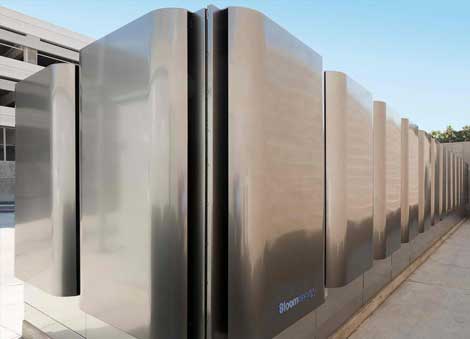
AT&T has agreed to purchase an additional 9.6 megawatts of Bloom Energy Servers (shown above) to provide energy for its facilities and data centers (Image: Bloom Energy)
Bloom Energy continues to gain traction for its fuel cell technology with major data center operators. AT&T said today that it will purchase an additional 9.6 megawatts of fuel cell capacity, which will make it Bloom Energy’s largest non-utility customer.
In July 2011, AT&T announced plans to deploy 7.5 megawatts of "Bloom Boxes" at 11 AT&T sites in California, including data centers. With today’s announcement, AT&T will now have more than 17 megawatts of Bloom Energy Servers helping to power 28 AT&T sites in California and Connecticut. Once fully operational, all of AT&T’s Bloom Box installations are expected to produce more than 149 million kilowatt hours (kWh) of electricity annually, enough to power more than 13,680 homes per year.
"AT&T continues to be on the forefront of energy management and understands the need to find innovative ways to power the next generation," said KR Sridhar, CEO of Bloom Energy. "The investment they are making now not only means they will have control on their own energy destiny, but will also help ensure a brighter and more energy rich future for all."
The Bloom Energy Server is based on solid oxide fuel cell technology that converts fuel to electricity through an electro-chemical reaction, without any combustion. Because they are housed at the customer premises, the Bloom box can continue operating during grid outages.
"A key differentiator for fuel cells compared to other forms of alternative power is that fuel cell electricity production is virtually constant," explained John Schinter, AT&T’s Senior Energy Director. "They provide steady recurring electricity production at a relatively predictable cost, replacing the traditional electricity bill, which can be volatile."
In addition to Bloom Energy fuel cells, AT&T has deployed nearly 3.9 MW of solar installations and works with external groups, such as the Environmental Defense Fund and Rocky Mountain Institute to investigate highly-scalable energy efficiency projects.


