
-
Facebook Responds on Coal Power in Data Center
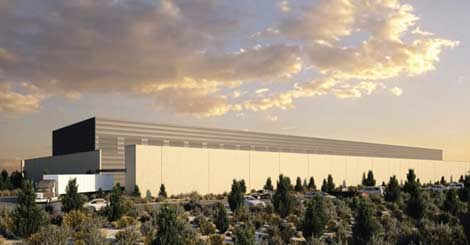
Facebook has responded to growing criticism of its power choices for its new data center in Prineville, Oregon. This is one of the first cases in which a data center’s energy sourcing has attracted this kind of public attention, but it won’t be the last.
Earlier this month we noted a report that Facebook’s new Oregon data center, which has been designed to be highly energy-efficient, would be getting its power from a local utility that uses coal to generate the majority of its power. This news, initially reported by SearchDataCenter, has been getting attention from environmental groups and green blogs. The issue was highlighted on TreeHugger and Change.org, and has even led to the creation of a Facebook group (Tell Facebook to use Clean Energy for its Data Center).
Facebook’s Response
Yesterday Facebook responded via our comment section on the original post, with a statement from spokesperson Lee Weinstein. Since Facebook has taken its lumps on this issue, I felt its response should get equal visibility. Here’s Weinstein’s comment:I’m writing on behalf of Facebook to share their response to the issues you’ve posed. Most electrical commercial and residential power in the United States comes from a variety of sources. Our new data center will be receiving our power through PacifiCorp, which like most utilities has a diverse generation portfolio including hydro, geothermal, wind and coal. PacifiCorp is now the #1 utility owner operator of renewables, having grown their portfolio 2,400 percent over the past three years.
When it comes online in early 2011, the new Facebook data center will also be one of the most energy efficient in the world, featuring an innovative cooling system created for the unique climate characteristics in Prineville, Oregon.
The new, world class energy-efficiency technologies the Facebook data center will utilize include an evaporative cooling system; an airside economizer that will bring colder air in from the outside; re-use of server heat to warm office space in the colder months; and new patent pending highly efficient electrical design will reduce electricity usage by up to 12 percent. The entire facility will be built to LEED Gold standards.
The State of Oregon has a very aggressive Renewable Portfolio Standard, calling for 25 percent of power in the state to be produced by renewable resources by 2025. Facebook believes this policy will ensure continued growth of renewable generation resources. Facebook’s commitment is, regardless of generation source, to use electricity as wisely and as efficiently as possible.”
I’ll circle back to our commentary on the original post: “This is a good example of the ‘clean vs. cheap’ dilemma faced by data centers with massive power requirements. Companies like Google and Facebook want to be as green as possible, but must also control costs. The economics of on-site generation of using wind or solar power still don’t add up for most providers. That means the best way to use more renewable energy in the data center is to buy it from the utility company.” Sometimes that’s not as easy as you’d think, even in Oregon.
The irony is that companies like Facebook, which make energy efficiency a priority and are open about their interest in sustainability, are held to a higher standard when it comes to energy sourcing. We’ve previously noted Facebook’s focus on efficiency in the leasing and design of its data centers:
- Facebook Goes Green With New Data Center Space: The breakout growth of Facebook is turning out to be an economic stimulus plan for data center landlords. And the fast-growing social network’s infrastructure isn’t just getting bigger, it’s getting greener, with a focus on LEED Gold or Platinum facilities.
- Facebook Follows Google to Data Center Savings: Facebook says it’s streamlining its servers, and also plans to adopt a novel power distribution design pioneered by Google.
- It’s Official: Facebook is Oregon’s ‘Company X’: Facebook says the 147,000 square foot Prineville data center will be designed to LEED Gold standards and is expected to have a Power Usage Effectiveness (PUE) rating of 1.15.
Google to Face Similar Scrutiny
Another company bearing the weight of high expectations is Google, whose actions are often viewed through the prism of the ”don’t be evil” sentiment expressed by its founders. The company’s sourcing of power for its data centers is likely to come under similar scrutiny. Major media outlets are increasingly interested in Google’s energy use in its data centers, including how much it’s using and how “green” that power is.Google is open about its interest in both data center efficiency and sustainability, and its foundation has made significant investments in wind, solar and geothermal power. But the company hasn’t been forthcoming about how much electricity its data centers use, and the media’s efforts to fill in the blanks can easily go awry. A recent example: the wild-ass guess by The Wall Street Journal that Google’s energy use was “roughly equivalent to the output of two large conventional power plants.”
Google has made enormous investments in building what it believes are the world’s most efficient data centers. Other media outlets are taking a hard look at Google’s energy use, and whether it is aligned with its commitment to sustainability. Will Google wait to let others characterize its data center energy use, or disclose more about its current power usage and sourcing and the company’s plans to make it more sustainable over time?
Facebook Spokesman Defends Coal-Powered Data Center
Posted February 17th, 2010[...] a spokesperson, Lee Weinstein, commented on an article by Data Center Knowledge (DCK). Today, DCK posted a followup story quoting Weinstein’s comment. Here is a portion of the quote: …Our new data center will [...]
Facebook Answers Criticism on Energy Sources For New Data Center « CleanOregon
Posted February 17th, 2010[...] Rich Miller’s articles here and here. Possibly related posts: (automatically generated)That Annoying Speed Bump May be a Source of [...]
Facebook to Build Partially Coal-Powered Data Center in Oregon « Kaleidoscopic
Posted February 18th, 2010[...] backlash from supporters of clean energy, spokesperson Lee Weinstein spoke up on Data Center Knowledge, Our new data center will be receiving our power through PacifiCorp, which like most utilities has [...]
Dietrich Muylaert
Posted February 18th, 2010Facebook has, without warning, deleted the FB-group “Tell Facebook to use clean energy in its data center.”
The group existed for merely two days, was very popular and swiftly growing. At the moment of its deletion the group had about 700 members and there were over 3000 invitations to join the group, send out by its members, which were not yet responded upon. The number of group memberships was rising exponential.
Also at the moment of deletion the groups creator was in the progress to join forces with a major environmental movement to mobilize the public and to let them show their dismay by becoming member of the group. Which would have boosted membership even more.
We regret the undemocratic tactics which Facebook has applied in this matter.
Dietrich Muylaert
Posted February 19th, 2010Facebook has restored the visibility of the group “Tell Facebook to use clean energy for its data center” after a period of 12 hours.
A reason on why the group was put to invisible is not given by Facebook, yet.
Dietrich,
I reached out to Facebook, which looked into the matter and restored the group. “This group was disabled in error and has been reactivated,” the company said. “We sincerely apologize for any inconvenience this has caused.”
In fairness to Facebook, you may want to rethink your approach to spreading news about the group. Your Tweets promoting the group appear indiscriminate. If Facebook receives complaints about unsolicited emails or tweets to promote a group, it would certainly review the group’s status. I’m not saying that’s what happened here, as I have no information about that … but it’s something to consider.
Rich,
Thank you for your comments. We started a group on Facebook, with a petition Web site hosted at our facility outside of the Facebook foray. I wanted to clarify something noted in the article:
“Earlier this month we noted a report that Facebook’s new Oregon data center, which has been designed to be highly energy-efficient, would be getting its power from a local utility that uses coal to generate the majority of its power.”
Pacific Gas & Electric is not “local” within Oregon. They are a California corporation that operates no coal generation facilities in the State. This means that the coal energy purchased by Facebook is being generated in California. Through the WECC (Western Electricity Coordinating Council) you can technically think of it as one big, shared grid, but consider that electricity loses its potential in transiting the many miles from source to destination.
What is sad is that Portland General Electric (PGE as it is known here in Oregon, not to be confused with Pacific Gas & Electric — PG&E) has countless, renewable energy alternatives within 100 miles of the Prineville datacenter location.
Is it really about cost? When there is just a single coal generation plant in Oregon (operated by PGE but soon due to be decommissioned) and just one other coal plant in Washington State, it is hard for “us locals” to swallow the idea of a social media company to build a facility in the Northwest and NOT use truly “local” utilities for its energy needs.
Thank you,
David Anderson
Monday Meltdown: Feb. 22nd 2010 « The Daily Bayonet
Posted February 22nd, 2010[...] afraid that someone, somewhere is having fun with electronics. Green activists demand that Facebook should use only green power, but not apparently enough to delete their pages off the servers of the leading distributor of [...]
Can Facebook’s coal-powered efficient data center still be green? « N Plus One
Posted February 24th, 2010[...] be getting a significant portion of its power from coal-fired power plants, rather than hydro. A subsequent post by DataCenterKnowledge shared Facebook’s response to the uproar, which essentially [...]
Facebook Relying on Coal for New Data Center | Daily Greenz, the Blog from Greenzer.com
Posted March 11th, 2010[...] their new data center in Oregon partly because of the cool, dry climate, which will allow them to use an evaporative cooling system that brings air from outside to cool the equipment instead of constant air conditioning. In [...]
Anonymous
Posted June 24th, 2010The latest data center trends are disturbing. If you look at Facebook, Google, Apple, eBay and other big players in the cloud space; they share a number of environmentally disastrous environmental decisions.
1.) They are building on rural land, which means sprawl, deforestation and long commutes for employees.
2.) They are building single story, which means more sprawl and deforestation.
3.) The remote location means a longer haul of fibre (so again, more clearing of land to make a right of way for the utilities).
4.) They are building in states like Utah, Oregon and North Carolina; states with some of the highest percentages of coal based energy in the country. Why? Because it’s cheap.
I advocate these companies redirect their strategy to urban data centers in major cities. Particularly in states with a cleaner energy portfolio like California and New York. There are plenty of old industrial buildings in need of rehab that are far better positioned geographically with regard to where major fibre optic PoP’s join. Let’s keep our forests intact and grow vertically in our cities rather than sprawling out until every last tree has been cleared.
With More Traffic, Facebook Plans Double Size of Its Oregon Data Center
Posted August 2nd, 2010[...] to help cool the servers. The company is also getting a steep discount on power — including renewable and non-renewable power — from an area [...]
Greenpeace vs. Facebook: Mit Kinder-Video gegen den Kohle-Fresser | Basic Thinking
Posted September 17th, 2010[...] reagiert natürlich gelassen (mit Ablehnung) und ließ verlautbaren, dass das neue Rechenzentrum sehr energieeffizient arbeiten werde. Das sei im Grunde alles, was [...]
Facebook's New HQ Will Be Solar-Powered | Crisp Green
Posted November 12th, 2011[...] supply the energy for its massive data centers. The company responded by reminding the public that power for its newest data center would come from multiple sources, including renewables, and would be one of the most energy efficient in the [...]
RESOURCE LINKS:

Building A Cloud-Savvy Model for TCO and ROI
How Storage is Shaping The Cloud Data Center
Bringing Colo to the Customer: Modular Gets Local
Microsoft’s $1 Billion Data Center

February 17th, 2010